Make a copy and fill in what you know
Download the Markdown template and open it in your preferred document editor. Keep unknowns as open questions. This page does not submit or collect project information; use a private document for your answers.
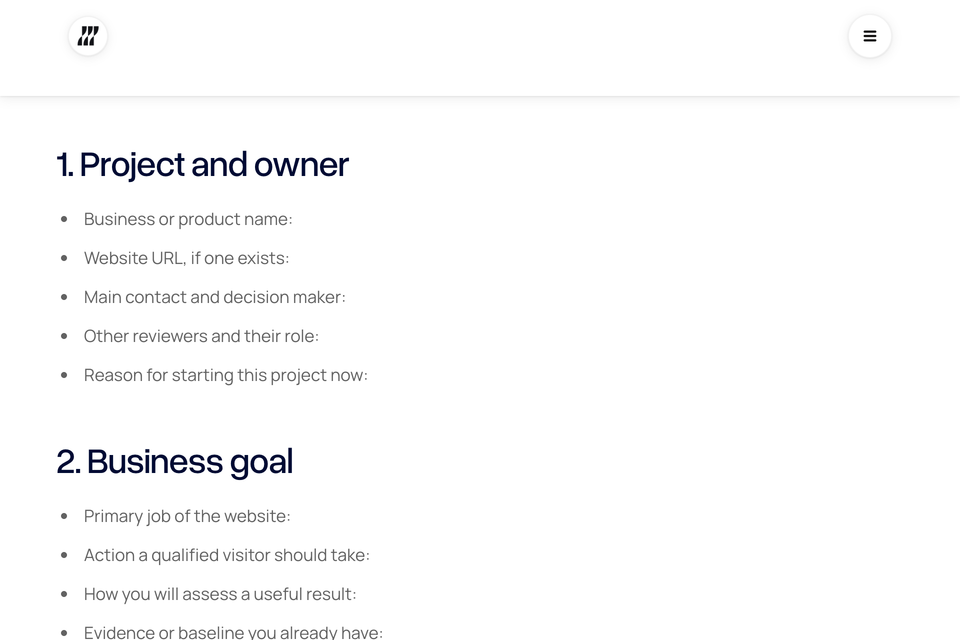
1. Project and owner
- Business or product name:
- Website URL, if one exists:
- Main contact and decision maker:
- Other reviewers and their role:
- Reason for starting this project now:
2. Business goal
- Primary job of the website:
- Action a qualified visitor should take:
- How you will assess a useful result:
- Evidence or baseline you already have:
- What this project is not expected to solve:
3. Audience and decisions
- Primary audience:
- What they already know:
- What they need to understand or compare:
- Common questions and objections:
- Evidence behind these assumptions:
- Accessibility, language or device needs:
4. Pages and content
- Essential pages and the purpose of each:
- Reusable page types, such as services or articles:
- Who creates and approves copy:
- Who supplies and approves images, logos and quotes:
- Content that already exists:
- Content that must be created:
- Existing URLs that should be retained or redirected:
5. Functionality and integrations
- Enquiry, booking or purchase flow:
- Information each form genuinely needs:
- CMS content types and editing roles:
- External systems and the owner of each:
- Account, payment or private-data requirements:
- Known hosting, domain or technology constraints:
- Success and failure states to test:
6. Direction and references
- Existing brand assets and usage guidance:
- Useful references and the specific reason each is useful:
- Visual or content approaches to avoid, with a reason:
- Design decisions that should remain flexible:
7. Scope and constraints
- Essential for launch:
- Useful if budget and time allow:
- Later phase:
- Budget range or spending constraint:
- Target date and why it matters:
- Content, access and approval dependencies:
- Who approves a scope change:
8. Acceptance and handoff
- Required visitor journeys to demonstrate:
- Intended accessibility, device and browser review scope:
- Search and migration checks:
- Account and billing ownership:
- Training or operating instructions:
- Updates, backups, restores and support owner:
- How post-launch issues will be reported:
Use the brief in a project conversation
Read how to write a website brief for examples of useful requirements. Then turn the agreed scope into the website launch checklist.

The Blitz Studio team
We design brands, build websites and engineer digital products.
Talk about your next project