The quick answer
For visibility in Google's AI search features, start with a useful page, ordinary search eligibility and the current Search Console controls. Then measure what the available reports actually show. An AI-specific filename, a new acronym or a long list of near-identical articles does not establish visibility.
For visibility in Google's AI search features, start with a useful page, ordinary search eligibility and the current Search Console controls. Then measure what the available reports actually show. An AI-specific filename, a new acronym or a long list of near-identical articles does not establish visibility.
Scope the question before buying another checklist
This guide concerns Google Search, including AI Overviews and AI Mode. Other assistants and search providers have their own systems and documentation. A recommendation about one provider should not be presented as a universal rule for every AI product.
The practical business question is which useful page deserves attention next. Record the intended reader, the decision they need to make and the evidence your business can contribute. This keeps the work connected to a real customer task instead of collecting new labels for the same SEO activity.
The sources below were checked on 1 November 2026. Their dates matter: Google's current generative-AI guide links to newer controls and reporting documentation than an older AI-features page. Check the current linked references before using an old screenshot as your operating instructions.
Check eligibility and the property's inclusion setting
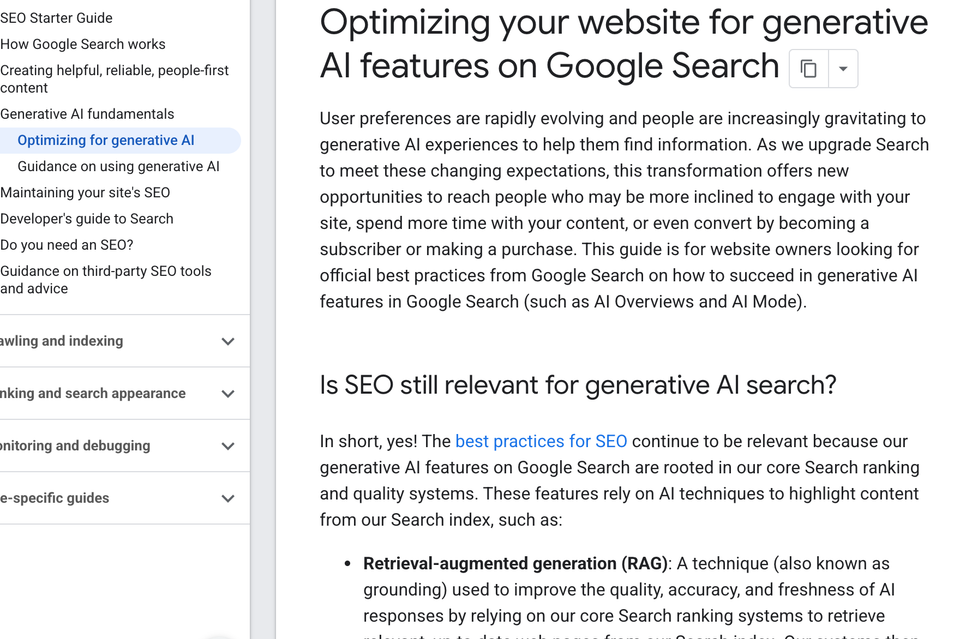
Google's generative-AI optimization guide connects these features to its Search systems. It says a supporting page must be indexed and eligible for a Search snippet, and points owners to the Search generative AI control in Search Console. Eligibility does not guarantee that Google will display the page.
The current control documentation describes inclusion as the default for properties, with inheritance possible for child properties. An authorized owner can inspect the applicable setting under Settings and Search generative AI. Record the exact property and effective setting before drawing conclusions. A domain property and a narrower URL-prefix property are not interchangeable observations.
Treat inspection and a setting change as separate actions. Agree the intended policy with the business owner before changing it. This article does not claim that Blitz Studio's private property setting has been inspected or changed.
Give the page a reason to be useful
Google's guide emphasizes content that contributes something distinctive. For a business website, turn that into an editorial evidence question: what can a reader learn here that helps them make the decision?
A fictional software consultancy might be able to explain a migration decision with approved constraints and an actual acceptance record. If those project facts are unavailable, it can publish an explicitly fictional planning example instead. It should not label that example a client result or invent a successful migration.
Keep a short contribution record: reader question, answer, supporting evidence, evidence owner and unresolved limits. A screenshot can demonstrate a visible interface; it does not by itself prove reliability, commercial results or a complete workflow test.
Before commissioning another article, compare the intended question with existing pages. If the same page can answer the question clearly, improve that page. The internal-link planning guide helps connect a distinct new answer to the pages where readers need it.
Prioritize fixes by the missing evidence
Use three separate review queues. The first is access: does the intended public page return correctly and can the relevant content be reached? The second is usefulness: does the page answer the reader's question with supported details? The third is measurement: can the owner observe the intended reporting period and property?
This is a proposed operating method, not a Google scoring formula. Assign each issue an owner and an observed result. For example, a broken public destination belongs in the access queue; an unsupported service claim belongs in content review. A missing authorized report is a measurement limitation, not proof of zero visibility.
Avoid a checklist that turns every recommendation into an urgent development task. Write the problem, the evidence and the expected benefit to the reader before deciding that a new component or integration is needed.
Understand what special AI files can establish
Google's current guide says it does not require special AI text files or special schema markup for these search features. It also rejects an ideal content length or a requirement to split answers into tiny pages. Those points apply to Google Search; they do not describe every external service.
A business may maintain a machine-readable file for a documented integration that actually uses it. Keep that purpose explicit. Its existence does not demonstrate a ranking gain or an AI-answer citation. Likewise, a schema validation pass is an implementation observation rather than evidence of exposure.
Use the SEO page planning worksheet to keep the reader question, public URL and evidence together. Do not create a separate page for every possible phrasing of the same question.
Read the current report rather than guessing from an old tutorial
The linked Generative AI performance report documentation says these insights were rolled out worldwide on 31 August 2026. It describes impressions with page, country, date and device dimensions, and notes that the report may be absent when a site has insufficient impressions. Its dates use Pacific Time. Do not infer the report's presence in a particular account from the public documentation.
For an actual review, record the property, report name, date range, filters, dimensions and export time. Keep preliminary data separate from a settled comparison. Missing report access, an unavailable value and a measured zero are different states.
The older AI-features page, dated December 2025 in the retrieved version, describes performance within the Web search reporting. The newer linked report documentation adds a more specific view. Use the current documentation and actual account interface together; do not copy an older reporting limitation into a current claim.
Separate exposure from business outcomes
An impression, a visit and a qualified enquiry answer different questions. Record what each observed metric means before comparing periods. Do not rename an impression total as clicks, revenue or a count of unique people.
A manual search screenshot is also limited evidence: it captures one response at a particular time and context. It is not a stable ranking history or a complete view of the site's visibility. Keep any such observation dated and scoped.
After a content change, log what changed and when. Compare relevant observations over an agreed period while acknowledging other changes. Publication and a healthy sitemap alone cannot establish improvement; the sitemap and indexing guide explains that distinction.
A practical next review
Choose one important existing page. Record its reader task and strongest supporting evidence, check its public behavior, identify one content gap and assign the follow-up. If images carry useful information, review their context and alternatives with the website image review worksheet.
Keep private reports in an approved evidence location. Publish an outcome only when it is supported and the business permits disclosure. The useful deliverable is a clearer page and a traceable review record, with visibility measured separately when authorized data is available.
Sources and limits
- Google Search Central: generative AI optimization guide.
- Search Console: Search generative AI control.
- Search Console: Generative AI performance report.
- Google Search Central: AI features and your website.
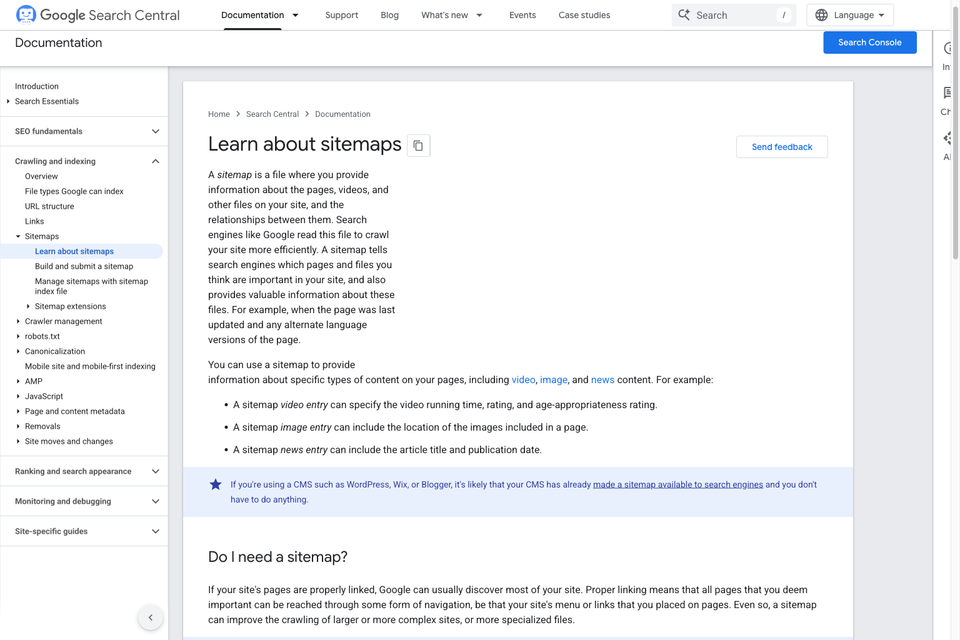
Cover attribution: Google Search Central. Source content is licensed under CC BY 4.0, except as otherwise noted by Google. The actual page screenshot was cropped and resized; no endorsement is implied.
Sources checked 1 November 2026. This is an editorial interpretation and practical review method, not a benchmark of AI providers or a claim of private account results. No inclusion, traffic or ranking outcome is guaranteed.

The Blitz Studio team
We design brands, build websites and engineer digital products.
Talk about your next project