Use this worksheet to connect existing website URLs with approved destinations, routing decisions and observed checks. Copy the records into project notes or download the editable Markdown. This page does not collect or save completed answers. Keep private traffic reports and operational evidence in the project's approved document system.
Describe the move
- Current public origin and affected paths:
- Intended new origin and URL structure:
- What remains unchanged:
- Content owner and routing implementer:
- Hosting or application setup:
- Preview environment and release owner:
- Review date, scope and known limits:
Use the migration redirect guide for the decisions behind these records. Distinguish a URL-changing move from a hosting change that keeps the same public routes.
Get an editable URL mapping table
Get the URL mapping CSV to build a row-based inventory in your spreadsheet tool. It includes column headers, one explicitly fictional example and a blank starter row. Both start as not tested. Replace the example and keep observed responses separate from intended decisions; no real destination is pre-approved.
Record inventory evidence
- CMS export or content inventory and date:
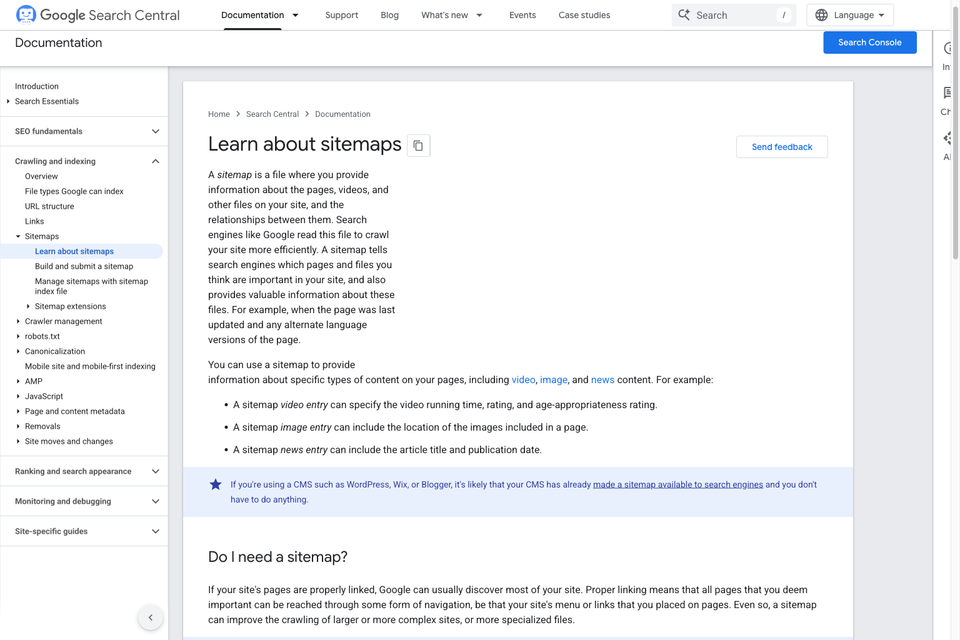
- Sitemap source and date:
- Internal and external link evidence:
- Authorized analytics or log evidence, if available:
- Important document and media references:
- Known historical gaps:
- How priority was decided:
An unavailable report is not a measured zero. Do not mark an old URL unimportant merely because it is absent from one source. Include relevant downloads and assets alongside page destinations.
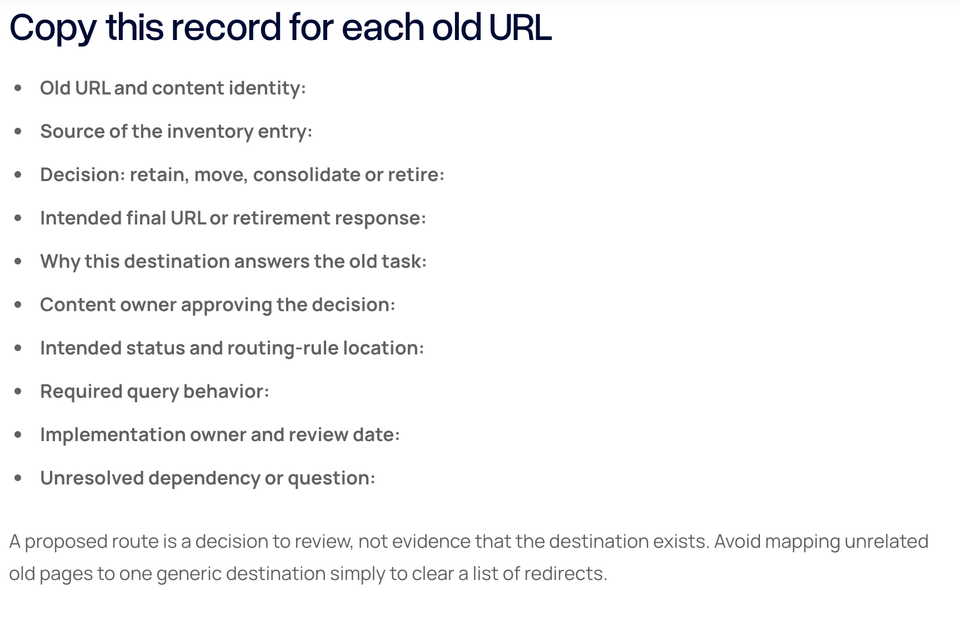
Copy this record for each old URL
- Old URL and content identity:
- Source of the inventory entry:
- Decision: retain, move, consolidate or retire:
- Intended final URL or retirement response:
- Why this destination answers the old task:
- Content owner approving the decision:
- Intended status and routing-rule location:
- Required query behavior:
- Implementation owner and review date:
- Unresolved dependency or question:
A proposed route is a decision to review, not evidence that the destination exists. Avoid mapping unrelated old pages to one generic destination simply to clear a list of redirects.
Copy this record for each verification attempt
- Old URL actually requested:
- Environment, date and method:
- First response status and destination:
- Any additional redirect hops:
- Final response status:
- Final content answers the intended task:
- Canonical reference, where applicable:
- Observed query behavior:
- Evidence location:
- Issue owner and repeat-check result:
Record the complete observed path. A permanent status on the first response does not prove that the final destination works. Keep unknown behavior explicit rather than marking an untested row as passed.
Fictional service-page example
This example is a proposed record for a fictional consultancy, not a live Blitz Studio mapping.
- Old path:
/consulting-overview. - Proposed destination:
/services/consulting. - Reason: The new page is intended to provide the current explanation of the same service.
- Approval needed: Confirm equivalent content with the service owner.
- Routing decision: The implementer must confirm the appropriate permanent-move rule in this environment.
- Open checks: Destination exists, content is relevant, no unnecessary chain and required queries behave as agreed.
A retired event page without a useful replacement needs its own decision. Do not reuse this example's destination or status automatically.
Update references around the map
- Navigation and contextual links:
- Canonical references:
- Sitemap entries:
- Language or regional annotations, if used:
- Campaign, profile and other external links the business controls:
- Download and image references:
- Owner and evidence for each update:
Use the internal-link guide for visitor paths. A routing rule does not automatically update the links and documents people already use.
Keep a post-release record
- Public release and implementation revision:
- Date and scope of public verification:
- Outstanding missing destinations or routing defects:
- Old routing infrastructure owner:
- Redirect-retention decision and next review:
- Authorized Search Console observations and period, if available:
- Authorized analytics observations and period, if available:
- Known measurement limits:
Public routing checks, Google processing and business outcomes are different observations. The sitemap guide explains why a valid file is not proof of indexing or traffic improvement.
Sources and scope
- Google Search Central: site moves with URL changes.
- Google Search Central: redirects.
- Google Search Central: HTTP status codes.
Prepared 3 November 2026. This worksheet supports planning and traceable review. It is not a completed migration, a comprehensive historical URL inventory or a guarantee of unchanged search performance.

The Blitz Studio team
We design brands, build websites and engineer digital products.
Talk about your next project