The quick answer
A useful website case study shows how a decision was made and what evidence exists afterward. It does not need a dramatic revenue percentage. It needs a clear problem, a specific contribution and a result the reader can inspect or understand without guessing what happened.
A useful website case study shows how a decision was made and what evidence exists afterward. It does not need a dramatic revenue percentage. It needs a clear problem, a specific contribution and a result the reader can inspect or understand without guessing what happened.
This guide offers an editorial framework for writing about delivered website work. The short examples are fictional unless identified as approved Blitz Studio portfolio material. They illustrate writing choices, not client findings or research we conducted.
Start with the buyer’s question
A prospective client usually wants to know whether you understand a problem like theirs. “We redesigned a modern website” says little about that problem. “Buyers could not tell which plan included onboarding” gives a reader something concrete to assess—provided you have evidence that this was actually the problem.
Identify where the problem statement came from: an approved brief, a support log, an interview note or a documented review. A stakeholder concern and an observed visitor difficulty are different types of evidence. Keep that distinction in the writing. If the brief requested a clearer product explanation, say so; do not quietly turn that request into a claim that users were confused.
Describe the project’s scope and constraints. Was this a full build, a design handoff or a page refresh? Which work belonged to the studio and which belonged to the client or another partner? A precise contribution is more credible than implying ownership of the entire product.
Choose one decision the reader can see
Pick a decision that connects to the problem. For example, a fictional pricing page might move implementation requirements next to the package comparison. Show the relevant section, describe the information hierarchy and explain why that location was chosen.
Avoid using “cleaner,” “better” and “more intuitive” as the complete explanation. Describe the change: shorter package labels, visible implementation requirements or a separate enterprise enquiry route. A reader can then judge whether the reasoning fits their situation.
A before-and-after image shows a visual difference. By itself it does not establish that task completion, accessibility or conversion improved. Pair it with an explanation of what it demonstrates and keep claims within that boundary.
Use artwork as evidence of the work
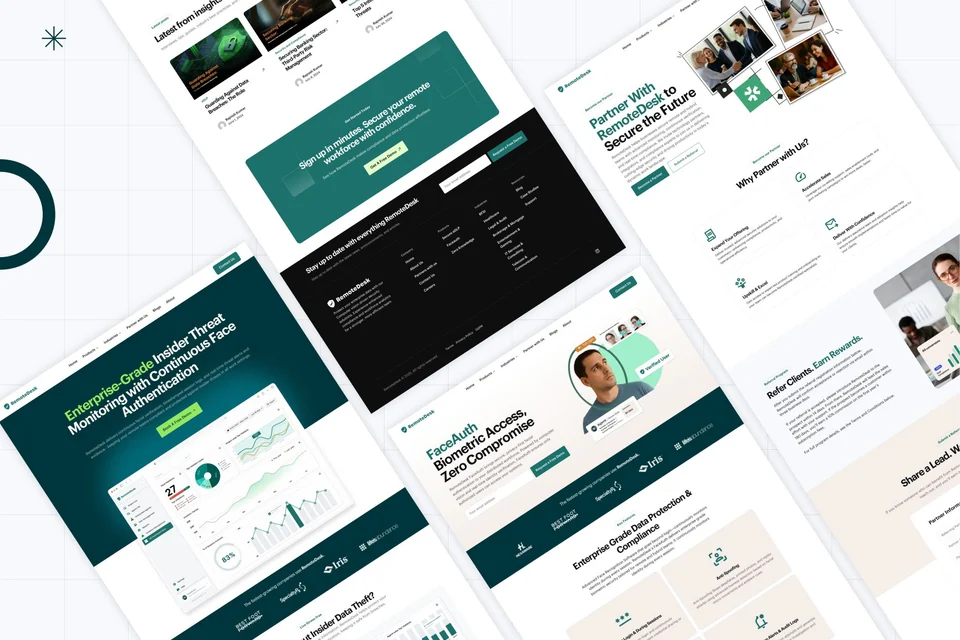
The cover of this article reuses RemoteDesk artwork in our approved portfolio. It is evidence of the design shown there. We are not attaching a new revenue, conversion or usability result to that image. That boundary is useful whenever a project has strong visual evidence but no approved outcome measurement.
Caption artwork with the project, the relevant screen or section and what the reader should notice. If the image is a design rather than the current live product, identify it as a design. Do not label a concept as a production screenshot or present an illustrative generated photograph as a client team.
Keep screenshots legible on small screens. Crop to the decision being discussed when a full-page image would make every detail unreadable, and preserve enough context to show what the section belongs to. Record the source and permission for the original; do not substitute a social-media copy for a unique approved master.
Separate delivery from measured outcomes
There are several honest ways to describe a result. A delivery result could be that the agreed page set and reusable components were handed over. An observed usability result requires an actual method, participants or task definition and documented observations. A business result requires a defined metric, period and data source.
For a hypothetical lead-form change, “the new form was published” describes delivery. “More enquiries arrived” requires counts and periods. “The redesign caused more qualified leads” requires a stronger explanation of attribution and qualification. Do not jump between these levels because the stronger sentence sounds more impressive.
If a metric is approved for publication, retain its definition, baseline, comparison period, denominator and known changes in traffic or acquisition. Explain whether the figure is measured, estimated or supplied by the client. A percentage without these details can obscure more than it reveals.
Write a result when measurement is unavailable
You can still publish a useful case study when no approved analytics exist. Describe what was delivered, show a relevant artifact and explain which question remains unanswered. For example: “The revised page places setup requirements beside the plan comparison. Its effect on qualified enquiries has not been measured for this case study.” This is a fictional wording example, not a Blitz Studio project result.
Avoid filling the gap with invented praise, anonymous testimonials or claims that the work transformed the business. If a client quote is available, keep the exact approved wording, permission and speaker attribution in your internal record. A testimonial is that person’s account, not independent measurement.
A practical page structure
- Context: business, audience, scope and contribution.
- Problem: one specific concern with its source.
- Constraint: the condition that shaped the choice.
- Decision: the change and the reasoning behind it.
- Artifact: an approved image, deliverable or link that supports the explanation.
- Result: delivery or observed outcome, with the relevant evidence and limits.
- Next step: a relevant contact route or related project.
Write a first draft from the evidence record rather than assembling claims and searching for support afterward. Use the case study evidence worksheet to connect each publishable statement to its source and permission.
Review for credibility before publishing
Ask someone who did not work on the project to identify what changed and what the case study actually proves. If they cannot distinguish a design intention from a measured result, revise the wording. Check captions, mobile image delivery, links and the contact route as part of the same review.
Google’s people-first content guidance asks publishers to consider original information, clear sourcing and trust. That supports a careful editorial approach; it does not prescribe this case-study structure or guarantee rankings. The structure here is our practical recommendation.
For related planning, read what belongs on a SaaS homepage and use the website brief template. Choose a project whose evidence you can show clearly, then let the detail make the case.

The Blitz Studio team
We design brands, build websites and engineer digital products.
Talk about your next project